
LMY is a text abbreviation that stands for love and miss you. People use it to tell someone they care about them and wish they were closer even when they cannot be together in person.
If a friend, a partner or a family member just sent you a text that said “lmy” and you have no idea what it means, you are not alone. Thousands of people search for the lmy meaning in text every month because the abbreviation shows up everywhere from group chats to Instagram comments, yet almost nobody explains it out loud. In this guide, you will learn exactly what LMY stands for, where the phrase came from and how its meaning shifts depending on who sent it to you.
By the end of this article you will also know how LMY compares to similar texting abbreviations like LY and ILY, how people typically expect you to respond and when the term fits the moment versus when it feels out of place. Whether someone just sent you LMY for the first time or you want to start using it yourself, this breakdown covers every angle.
What Does LMY Stand For
LMY is short for love and miss you. It combines two feelings into one quick message: affection for the person and a sense of longing because they are not physically present. Instead of typing out a full sentence someone can send three letters and communicate the same emotional weight.
Dictionary.com lists LMY as a textspeak acronym with this exact definition and cites real social media examples of people using it toward close friends and family members. That kind of documentation matters because it confirms the meaning is not just internet rumor. It is a recognized piece of digital shorthand with a consistent, traceable definition.
The phrase works so well in texting culture because it fits the tone of a quick, casual check in. Sending “I love you and I miss you” can feel heavy or overly formal depending on the relationship. LMY delivers the same sentiment in a lighter, faster package that suits the rhythm of modern messaging.
Where Did LMY Come From
Text abbreviations like LMY grew out of the early 2000s texting era when phones had limited character counts and typing on a numeric keypad was slow. People shortened common phrases to save time and keystrokes. LY for love you and ILY for I love you were already common by that point, and LMY followed the same pattern by folding in the idea of missing someone.
Social media accelerated the trend once character limits on platforms like early Twitter pushed users to compress their language even further. Short affectionate phrases became a way to say something meaningful without eating into a post’s word count. LMY carried over from texting into comments, captions and direct messages, which is why you now see it across nearly every messaging platform.
The abbreviation never had one single inventor or a specific viral moment that launched it. Instead it developed gradually as part of a broader shift toward efficient, emotionally direct digital language. That slow, organic spread is actually typical of most texting slang, which tends to form through repeated use rather than deliberate coining.
How People Use LMY in Different Relationships
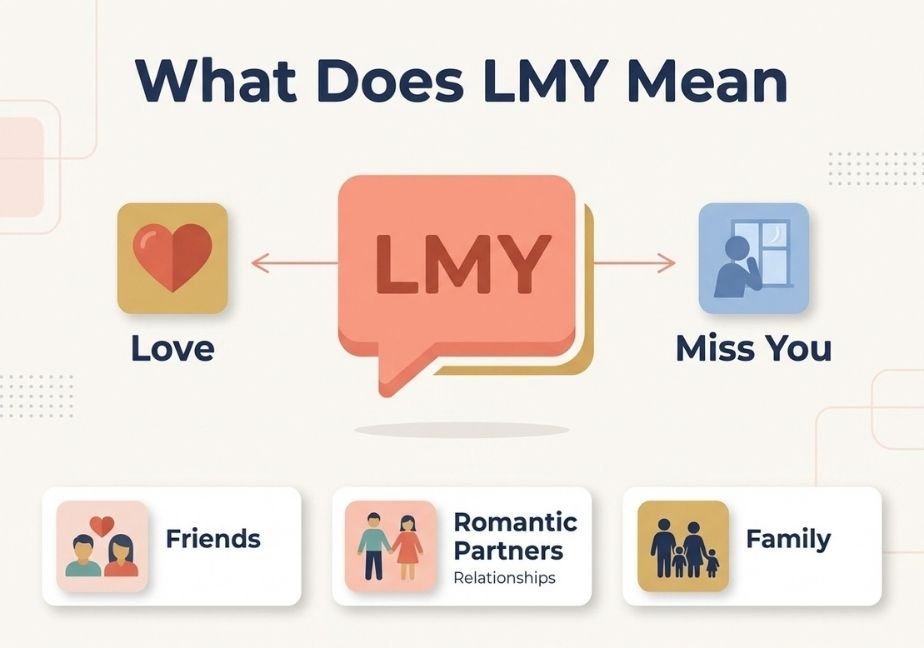
The core meaning of LMY stays the same across contexts, but the emotional weight behind it shifts depending on who is sending it and the history between the two people.
LMY From a Friend
Between close friends LMY often functions as a warm, casual way to say you have been thinking about someone. It shows up after a period of not talking much or when one friend brings up an old memory. A message like “omg remember that trip, lmy” signals nostalgia and platonic affection rather than anything romantic.
Friends also use LMY to close out a longer conversation as a way of ending things on a warm note. It works almost like a verbal hug, wrapping up the exchange with a small reminder that the friendship matters.
LMY From a Romantic Partner
In a romantic relationship LMY tends to carry more emotional intensity. It often gets sent during periods of physical separation such as one partner traveling for work or the couple living in different cities. The phrase reassures the other person that the distance has not changed how they feel.
Because romantic partners already share an established emotional baseline the same three letters can feel far more significant than they would coming from a casual acquaintance. Context and relationship history do most of the interpretive work here.
LMY From Family
Parents, siblings and other relatives use LMY in a more understated way. A parent might text it to an adult child who moved away for college or work. Siblings might use it after a family gathering ends and everyone heads back to their own homes. The tone usually stays gentle and low key rather than dramatic.
Professional settings are the one place where LMY rarely appears and generally should not be used. Workplace communication benefits from clarity and a level of formality that abbreviations like this can undermine.
LMY vs Similar Texting Abbreviations
LMY sits inside a small family of affection based texting shorthand. Knowing how it compares to the others helps clarify exactly what makes it distinct.
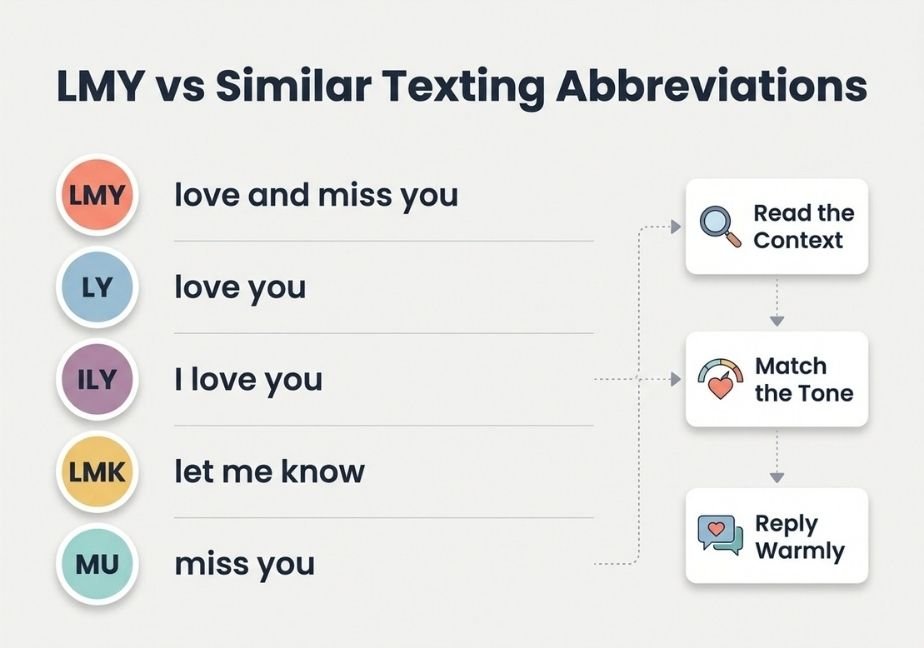
- LY means love you and skips the missing you element entirely.
- ILY means I love you and reads as slightly more formal than LY.
- LMK means let me know and has nothing to do with affection.
- LMS means like my status and relates to social media engagement.
- MU or MYM both shorten miss you without the love component.
LMY stands apart because it merges two distinct emotions, love and longing, into a single acronym. That combination is part of why it resonates so strongly with people going through a temporary separation from someone they care about.
How to Reply When Someone Sends You LMY
Figuring out how to respond to LMY depends heavily on your own feelings and the nature of the relationship, but a few reliable options exist.
- Mirror it back with “lmy too” if the feeling is mutual and immediate.
- Reply with a fuller sentence like “I miss you so much” for extra warmth.
- Send LY or ILY if you want to acknowledge the message without matching its intensity.
- Add a photo or memory from a shared moment to personalize your response.
- Simply reply with a heart emoji if a short, light touch feels more natural.
There is no single correct response since the goal is matching the emotional tone of the original message rather than following a strict script. Reading the relationship context will always matter more than memorizing a formula.
Regional and Generational Differences in Slang Use
Texting abbreviations do not spread evenly across every age group or region. Younger users, particularly teens and people in their twenties, tend to use LMY more casually and more frequently, often layering it with emojis or repeating letters for emphasis such as “lmyyy.” Older users who adopted texting later in life may use it more sparingly and closer to its original literal meaning.
Regional slang trends also shape how often LMY appears. It shows up heavily in American English texting culture and has been documented across platforms popular with younger US based users including Snapchat, Instagram and TikTok comment sections. In other English speaking regions similar phrases exist but LMY specifically is less universally recognized, which is part of why so many people search for its meaning when they encounter it for the first time.
When You Should Avoid Using LMY
Despite its popularity LMY is not appropriate in every setting. A few situations call for caution.
Professional emails and workplace chat tools are not the place for this kind of abbreviation since it can come across as unclear or unprofessional to colleagues and clients. Early stage relationships or new acquaintances may also find it confusing or overly forward if the emotional history is not there yet to support it. When in doubt, spelling out your feelings in full sentences avoids any risk of the message landing the wrong way.
Frequently Asked Questions
What does LMY mean from a girl?
It usually means love and miss you and signals warmth toward a friend, family member or partner depending on context.
What does LMY mean from a guy?
The meaning stays the same regardless of gender. It expresses affection and longing, though intensity depends on the relationship.
Is LMY romantic or just friendly?
It can be either. Tone depends entirely on who sent it and the history between the two people involved.
What is the difference between LMY and LY?
LY only means love you. LMY adds the missing you element, making it slightly more emotionally direct.
Should I reply to LMY right away?
Not required, but a timely reply such as “lmy too” keeps the warmth of the exchange intact.
Final Thoughts
LMY may only be three letters, but it carries real emotional meaning built from decades of texting shorthand evolving to keep pace with how people actually communicate. At its core it simply means love and miss you, a quick way to tell someone they matter to you even when distance or time keeps you apart.
The next time this abbreviation shows up in your messages you will know exactly what it means and how to respond in a way that fits the relationship. Slang like this will keep evolving, but the underlying instinct behind it, wanting to stay emotionally close to the people who matter, is not going anywhere.


![A dynamic sports photo shows a male volleyball player in mid-air, spiking a ball over a net in an indoor arena[cite: 13]. Behind him, a massive image of an elephant is dramatically rendered in explosive golden dust and bright light[cite: 13]. Golden script text at the bottom reads "Flying Elephant Memoirs[cite: 13]."](https://tastimer.com/wp-content/uploads/2026/10/flying-elephant-memoirs-768x539.jpg)

10 Comments