

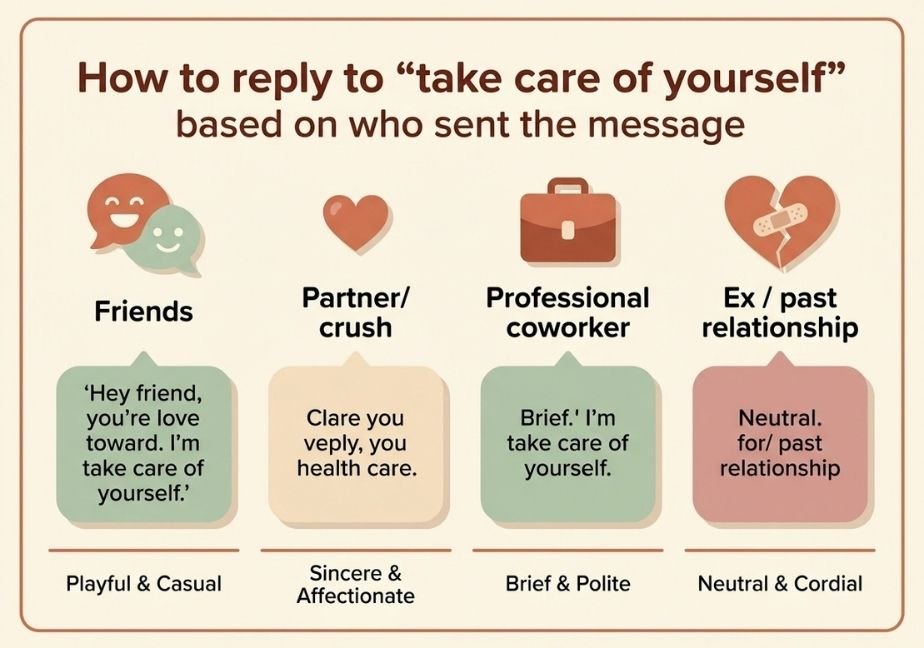
The best reply to “take care of yourself” depends on who said it. A simple “you too” or “thanks, I will” works almost anywhere. A warmer reply like “aww, you too, don’t work too hard” fits friends and family. A soft, caring reply works best for a partner or crush, while a short “thank you, you as well” is the safest choice in a professional setting.
You just got a text, an email or a goodbye at the door that ended with “take care of yourself,” and now you are staring at your phone wondering what to say back. It feels like it should be simple, yet the right reply of take care of yourself can shift depending on who sent it and how the rest of the conversation felt. A quick “you too” might work with a coworker but feel flat coming from someone you actually care about.
This guide breaks down exactly how to reply to “take care of yourself” across every situation you are likely to run into, from close friends and family to a crush, a partner, a coworker or even an ex. You will also learn what the phrase actually signals, when it might mean more than a simple goodbye and a few replies you should avoid if you want to keep the conversation warm instead of awkward.
|Also read this article:EMP Meaning in Text: All the Definitions You Need to Know
What “Take Care of Yourself” Actually Means
“Take care of yourself” is a farewell phrase that expresses concern for someone’s wellbeing. People use it at the end of a conversation, a text thread or an email and it almost always carries a small dose of genuine warmth rather than being pure formality. According to Cambridge Dictionary’s notes on common English farewell expressions, phrases built around “take care” have long functioned as a gentler, more personal alternative to a plain “goodbye.”
The phrase can carry slightly different weight depending on context. A friend saying it usually means exactly what it sounds like, a simple wish for you to stay healthy and safe. A partner or a crush saying it can carry a softer, more affectionate undertone. An ex saying it after a difficult conversation can sometimes signal emotional distance rather than closeness, which is why context always matters more than the four words themselves.
Where the Phrase Comes From and Why It Sticks Around
“Take care” and its longer form “take care of yourself” have been part of everyday English for generations, long before texting made short farewells the norm. Linguists who study common speech patterns note that farewell phrases built around the word “care” tend to survive because they do double duty, closing a conversation while also reassuring the other person that the relationship matters beyond that single exchange. That is part of why the phrase feels warmer than a plain “bye” even though both technically end a conversation the same way.
Texting culture has only made the phrase more common rather than replacing it. Where a phone call once ended with a longer, more detailed goodbye, a text or a DM often compresses that same sentiment into four familiar words. The phrase shows up constantly across WhatsApp, iMessage, email sign offs and even LinkedIn messages, which is exactly why so many people pause and wonder what to send back. A short phrase with a lot of emotional flexibility naturally invites a little hesitation before replying.
Why Your Reply Depends on the Relationship
Before looking at specific examples, it helps to understand the one rule that applies across every situation: your reply should roughly match the emotional weight of the original message. A brief, casual “take care” from someone you rarely talk to does not need a long, heartfelt response, while a warm, personal message from someone close to you deserves more than a flat one word reply.
Three quick factors are worth checking before you type anything back. First, how close is your relationship with this person in general. Second, how emotionally loaded was the conversation that came right before the goodbye. Third, do you expect to talk again soon, or does this feel like a longer pause in contact. Running through these three questions takes only a few seconds and almost always points you toward the right tone.
|Also read this article: LMY Meaning in Text: What This Popular Slang Really Means
General Replies You Can Use in Almost Any Situation
If you are unsure how formal or casual to be, a few safe, versatile replies work in nearly every setting.
“You too, take care!” mirrors the sentiment back simply and works almost everywhere. “Thanks, I will, you take care too” adds a touch of warmth without overdoing it. “Will do, talk soon” works well when you expect to speak again shortly. “Appreciate that, you as well” feels polite and slightly more formal.
These options are useful defaults because they match the tone of the original message without adding pressure or extra meaning. When in doubt, mirroring the energy of whoever sent the message is almost always the safest move.
How to Reply When a Friend Says It
Friends usually say “take care of yourself” as a genuine, low pressure way to end a conversation, so your reply can be relaxed and a little playful.
“You too, don’t do anything I wouldn’t do” keeps things light and familiar. “Aww thanks, love you, talk soon” fits close friendships with an easy, warm tone. “I always do, you take care too” works as a lighthearted, confident response.
The goal with friends is matching the comfort level you already share rather than overthinking the wording. A reply that feels natural in your usual texting style will always land better than something overly formal.
How to Reply When a Crush or Partner Says It
When the message comes from a partner or a crush, a slightly softer, more personal reply usually feels right. This is often where people search specifically for a cute reply to take care of yourself, since the stakes feel a little higher.
“You too, I’ll be thinking about you” adds warmth without being overly intense. “I will, especially since you asked so sweetly” works well in playful, flirty exchanges. “Only if you promise to do the same” keeps a light, teasing tone between two people. “Always, especially knowing you care” fits a more established, comfortable relationship.
If the relationship is new, keeping the reply light and slightly playful avoids coming on too strong. In longer term relationships, a softer, more sincere reply usually feels more natural and appreciated.
|Also read this article:CBFW Meaning in Text: The Real Meaning You Need to Know
How to Reply When Family Says It
Family members often say “take care of yourself” as a habitual, caring sign off, especially parents, grandparents or older relatives checking in from a distance. The right reply here usually leans warm and reassuring rather than playful.
“I will, don’t worry about me” reassures a parent without sounding dismissive. “Love you, I’ll call you this weekend” works well when you want to keep the connection going. “Always do, tell everyone I said hi” fits larger family group chats nicely.
Family messages often come from genuine worry, so a reply that acknowledges their concern tends to land better than a short, generic response.
Timing and Platform Matter Too
The best reply of take care of yourself can also depend on where the message showed up and how quickly you respond. A text usually calls for a quick, casual reply within the same conversation, while an email sign off often does not need a direct reply at all unless you are continuing the thread anyway.
On WhatsApp or iMessage, replying within a few minutes to an hour feels natural for most relationships. On a work email, waiting until your next reply in that thread is perfectly normal, since the sign off is rarely meant to start a new exchange. On social media DMs, a short reaction emoji alongside a brief reply often feels more natural than a full sentence, especially with casual acquaintances.
Work emails and messages call for a shorter, more neutral tone, since overly personal replies can feel out of place in a professional thread.
“Thank you, you as well” is the safest, most universally appropriate professional reply. “Appreciate it, take care” mirrors the phrase back without adding unnecessary warmth. “Thanks, will do, have a good one” works well for a casual but still professional workplace.
Professional replies should stay brief and avoid emojis or overly familiar language unless you already have that kind of relationship with the coworker or client. A short, polite response is almost always the right call in formal settings.
How to Reply When an Ex Says It
This is one of the trickier situations, since “take care of yourself” from an ex can carry very different meanings depending on how things ended. Sometimes it is a genuine, kind gesture and other times it functions as a polite way of closing the door on further conversation.
If the breakup was mutual and friendly, a simple “thanks, you too, take care” keeps things civil without reopening anything. If the message feels final or distant, a short “you too” without extra warmth respects that boundary. If you are still hoping to stay in contact, a slightly warmer “I will, I hope you’re doing okay” leaves room for future conversation without pushing too hard.
Reading the tone of the message that came before it usually tells you more than the four words themselves ever could.
|Also read this article: Homey or Homie? Which Spelling Should You Actually Use Here
Funny and Casual Replies for Lighthearted Moments
Not every situation calls for a sincere response. In casual group chats or joking conversations, a funny reply of take care of yourself can land just as well.
“I’ll try, no promises” works as a lighthearted, self deprecating joke. “Define take care” plays into a running joke about being chaotic or forgetful. “You know I never do, but thanks” fits friends who enjoy playful banter.
These replies work best with people who already understand your sense of humor, since the same joke can land very differently with someone you do not know well.
Replies to Avoid
A few responses tend to fall flat or come across as dismissive, even when that is not the intention.
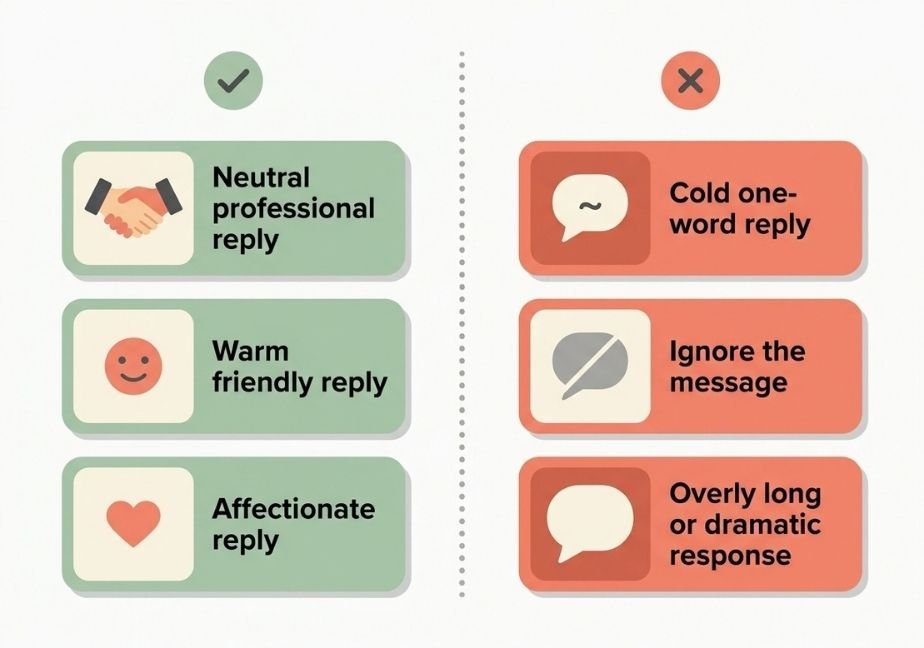
A single word reply like “kk” can feel cold, especially in a caring context. Ignoring the message entirely often reads as disinterest, even if unintentional. An overly long, dramatic reply can feel out of place for a simple, casual farewell. A sarcastic reply can misfire badly with someone who does not know your sense of humor well.
Matching the tone and length of the original message is usually the safest guide for what to avoid. When you are genuinely unsure how a joke or a shorter reply will land, defaulting to something warm and sincere is rarely the wrong choice.
|Also read this article:Winner or Winer? The Correct Spelling You Should Always Use
Frequently Asked Questions
What does it mean when someone says take care of yourself?
It usually means they care about your wellbeing and are wishing you health and safety as the conversation ends.
What is a good reply to take care of yourself?
“You too” or “thanks, I will” work almost anywhere, with warmer options fitting closer relationships.
How do you respond to take care of yourself from a guy or a girl?
The reply depends on the relationship, not gender. Match the warmth of the message itself.
Is take care of yourself a way of saying goodbye?
Often yes, especially in texts and emails, though it usually carries more warmth than a plain goodbye.
What should you reply if your ex says take care of yourself?
Match their tone. A short, polite reply works if the message feels final, while a warmer one leaves room open.
Conclusion
There is no single perfect reply of take care of yourself, since the right response depends entirely on who said it and the tone behind it. A simple “you too” covers most everyday situations, while friends, partners, coworkers and exes each call for a slightly different level of warmth. The safest approach is always reading the relationship and the moment rather than searching for one universal script.
Once you get comfortable matching tone instead of overthinking wording, replying to “take care of yourself” becomes second nature, whether it shows up in a casual text, a work email or a bittersweet goodbye.





One Comment