

You searched for Team Aelftech.com. Maybe you saw the name on a guest post page. Maybe a writer pitched you a link. Either way, you want a straight answer. So here it is. Team Aelftech.com points to the people behind Aelftech.com, a tech blog that welcomes guest writers.
In this guide, you will learn what the site covers. Next, you will see how its guest post model works. Then you will get simple checks that work on any tech blog. Finally, you will learn which facts are public and which are not. That last part matters. Many copy pages float around the web, so careful reading pays off.
What Is Team Aelftech.com?
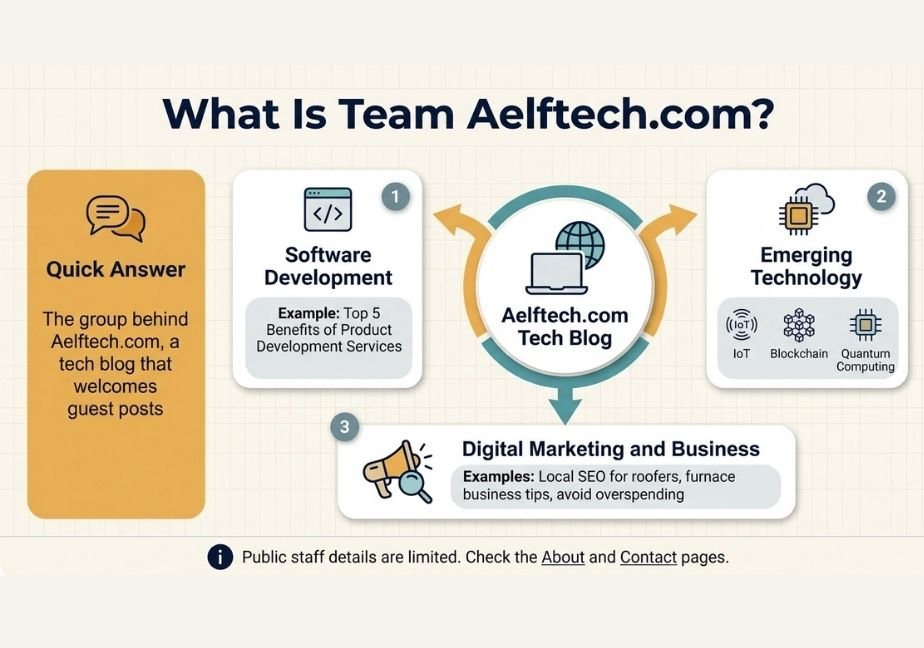
Team Aelftech.com is the group behind Aelftech.com. The site publishes tech content on software development, emerging technology and digital innovation. It also invites guest post proposals. However, public details about named staff are limited. So treat “team” as a general label for its editors and contributors. For current facts, check the site’s own About and Contact pages. climatetrace
Think of it like a small online magazine. Editors choose topics. Writers send drafts. Readers search for answers. In that sense, the word team simply describes everyone who keeps the site running.
What Does Aelftech.com Cover?
Aelftech.com sits in the broad tech niche. In fact, its writer page says it wants posts on software development, emerging technology and digital innovation. That gives the site a wide lane. As a result, readers may find deep tech topics next to practical business tips.
Software Development
Software is the first pillar. Developers look for tutorials and tool reviews. Business owners look for build advice. For example, one listed post covers the top five benefits of product development services. That topic helps founders who plan an app or a tool. Therefore, this pillar fits coders and buyers alike. climatetrace
Emerging Technology
Next comes emerging tech. The writer page names IoT, blockchain and quantum computing. These ideas sound big. However, many readers only know the buzzwords. Good posts explain them in plain words. harvard
For context, the Internet of Things means everyday devices that connect to the web and share data. Wikipedia’s overview of the Internet of Things is a solid place to start. Likewise, blockchain is a shared record that many computers keep in sync. Quantum computing uses the strange rules of tiny particles to solve some problems faster.
Digital Marketing and Business Topics
Third, the blog also touches marketing and small business topics. For instance, listed titles include a local SEO guide for roofers. Another title covers what to know if you run a furnace installation business. A third talks about how to avoid overspending on digital fun. Those topics sit outside pure tech. Still, they match the digital marketing angle on the writer page. Because of this, the blog reads like a mix of tech news and business help.
Is that mix a problem? Not always. Even so, a wide mix can blur focus. Strong blogs pick a few themes and go deep. So check whether each post shows real skill.
How the Guest Post Model Works
Guest posting is simple. A writer sends an idea. An editor reviews it. Then the site publishes it if it fits. The writer page also tells contributors to follow SEO best practices and to read the guidelines first. That is common for blogs of this type.
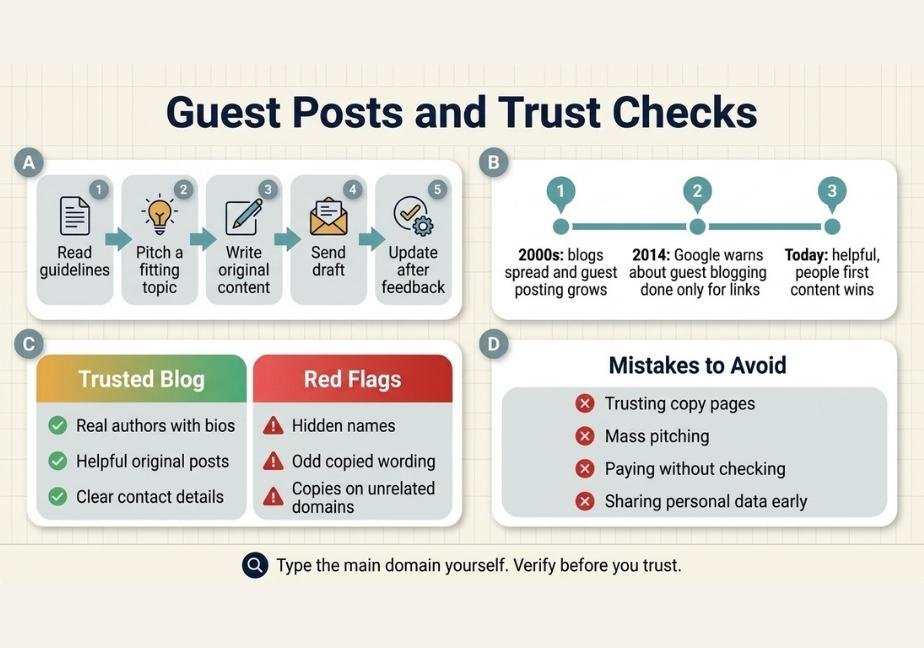
Here is the usual path:
- Read the site’s guest blogging guidelines first.
- Pitch a topic that fits software, tech or digital innovation.
- Write clear and original content for a real reader.
- Send the draft and wait for editor feedback.
- Update the post after the editor replies.
Why do writers take this route? First, they want exposure. Second, they want a link back to their own work. Third, they want to build authority. Meanwhile, the blog gets fresh content without a large staff. In short, both sides gain when the post helps readers.
Now a word of caution. Guest posts only work when they serve readers. Otherwise, they look like filler. Readers notice. Search engines notice too.
Why Guest Blogging Became So Common
Guest blogging grew as blogs spread in the 2000s. Small sites needed content. Writers needed an audience. So they traded. Over time, marketers saw a third benefit. Links from good sites could lift search rankings. As a result, the practice exploded.
However, trouble followed. In 2014, Google’s then web spam lead Matt Cutts wrote that guest blogging done only for links had turned spammy. Since then, Google has kept pushing the same message. Content must help readers first. Therefore, smart sites now vet writers. Likewise, smart writers now focus on value. That shift explains why guidelines pages exist. They protect the site. They protect readers too.
Why Do People Search for Team Aelftech.com?
Most searchers want one of three things. First, they want to know who runs the site. Second, they want to write for it. Third, they want to check if it is safe. So the intent is mostly navigational with a touch of informational. In other words, the real question is simple. Who is behind Aelftech.com and can I trust it?
Here are the common triggers:
- A writer sees a guest post call and wants proof the site is real.
- A site owner gets an outreach email and wants to vet the sender.
- A reader lands on a post and wants to know who wrote it.
- A marketer compares sites before paying for a guest post.
Each reason leads to the same need. People want clear facts. Sadly, public facts about named staff are thin. Because of that, a careful check beats guessing.
How to Judge Any Tech Blog Before You Trust It
You do not need special tools. You only need a few habits. Moreover, these habits work on any site. They also work on this one.
Look for Real Authors
Start with names. A trustworthy blog shows who writes each post. Also, it offers a short bio. Ideally, you can find that person elsewhere online. If a site hides every name, be careful. That does not prove bad intent. However, it limits trust.
Judge the Content Itself
Next, read a few posts. Ask three questions. Does the post answer a real question? Does it show first hand skill? Does it feel written for people? Google’s guidance on creating helpful, reliable, people first content uses the same ideas. It stresses expertise, clear sourcing and real value for the reader. Therefore, use it as your checklist.
Spot Copycat Pages
Finally, watch for copies. Search results show the same Aelftech writer page on many unrelated web addresses. Some sit on university and company domains. Several copies also swap normal words for odd ones, so the text reads strangely. This pattern can signal low quality copying. Of course, search results alone cannot tell who made those copies or why. Still, the lesson is clear. Type the main domain yourself. Do not trust a random copy.
What Readers Can Expect From a Tech Blog Like This
Tech blogs share a common promise. They explain hard ideas in simple steps. For instance, a good post turns a tough term into a short story. Then it adds an example. After that, it ends with a clear next step.
Expect a few things from Aelftech style posts:
- Short guides on software and product building topics.
- Plain explainers on IoT, blockchain and quantum computing.
- Marketing tips such as local SEO for service firms.
- Mixed quality, since many different writers contribute.
That last point deserves a note. When many writers share one site, quality can vary. So read each post on its own merits. Also, check the date. Tech moves fast. An old tip can turn wrong in a year.
Who benefits most? Students gain simple explainers. Small business owners gain marketing ideas. Freelance writers gain a place to pitch. Meanwhile, developers gain quick refreshers on new topics.
Tips for Writers Who Want to Contribute
Do you plan to send a pitch? Then prepare well. Editors read many emails. A sharp pitch stands out.
Try these steps:
- Read five recent posts to learn the tone.
- Pitch one clear idea with a short outline.
- Use real examples and simple words.
- Add a short author bio with proof of skill.
- Skip paid link tricks and keyword stuffing.
Also, think about the reader first. Ask what problem your post solves. Then solve it in the first two paragraphs. After that, add depth. Finally, edit hard. Short sentences help. So do active verbs.
Google also warns against content made only to game search rankings. Its spam policies cover link schemes and low value content made at scale. Therefore, write for people and let the links come naturally.
Mistakes to Avoid
Both readers and writers make errors around sites like this. Avoid these:
- Trusting a copy page on an unrelated university domain.
- Sending the same pitch to dozens of sites at once.
- Paying for a post without checking the site first.
- Sharing personal data before you confirm the site is real.
- Ignoring the guidelines and sending off topic ideas.
Besides that, avoid assumptions. For example, do not assume the word team means a big staff. It may mean a few editors. Likewise, do not assume a polished page means a trusted brand. Polish is easy to fake. Proof is harder.
Frequently Asked Questions
What is Team Aelftech.com?
It is the group behind Aelftech.com, a tech blog covering software, emerging technology and digital innovation. Public details about individual members are limited.
Does Aelftech.com accept guest posts?
Yes. Its writer page invites tech enthusiasts and industry experts to send article proposals. Read the guidelines before you pitch.
What topics does Aelftech.com cover?
Software development, emerging tech like IoT, blockchain and quantum computing, plus digital marketing and some business topics.
Who runs Aelftech.com?
Public details are limited. Check the site’s About and Contact pages for current names and verified contact details.
Is Aelftech.com safe to visit?
Use normal care. Look for HTTPS, clear contact details and original content before you share personal data or pay anyone.
Conclusion
Team Aelftech.com means the people who run Aelftech.com. The site is a tech blog. It focuses on software, emerging tech and digital innovation. It also takes guest posts and touches marketing and business topics.
Here is the takeaway. Do not rely on the name alone. Instead, verify. Read several posts. Look for real authors. Compare what you find with Google’s people first standards. If you plan to write for the site, read the guidelines and pitch with care. If you plan to pay for a link, slow down and check twice.
In the end, trust grows from proof. A clear author, helpful content and honest contact details beat any fancy label. Use those signals. Then decide with confidence.