

You open a chat and see three letters: WTD. There is no explanation and no clue about the tone. If you are trying to work out the WTD meaning in text, you are in the right place. This slang shows up on Snapchat and TikTok and in group chats every day.
In this guide you will learn what WTD stands for and where it came from. You will see real chat examples and other meanings that can confuse people. You will also get simple reply ideas and tips on when to skip the slang.
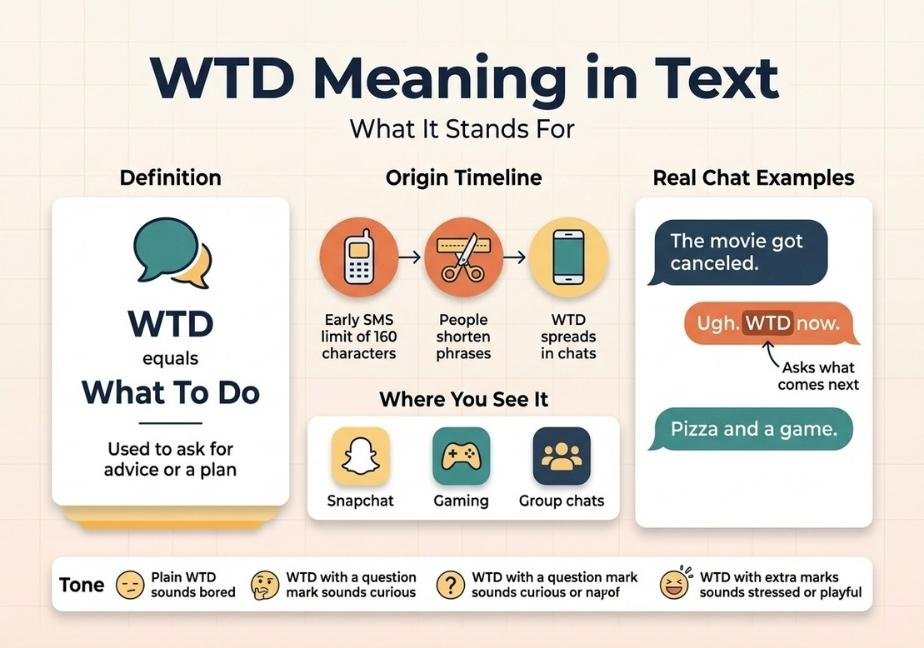
The WTD meaning in text is “what to do.” People send it when they feel stuck and want advice or a plan. In some chats it can also mean “what’s the deal.” At work it can mean “week to date.” The chat around it tells you which one fits.
What Does WTD Mean in Text?
WTD stands for “what to do” in most texting and social media chats. Someone types it when they need a suggestion or feel unsure about the next step. It works as a fast way to ask for help without writing a full sentence. Most people mean it in a friendly and casual way.
Think of WTD as a short call for direction. A friend may send it after plans fall through. Someone else may send it when a small problem pops up and they need a quick idea. In both cases the sender hopes you will jump in with a suggestion.
According to Dictionary.com, WTD is an internet slang acronym for “what to do.” The dictionary explains that it can point to a problem a person needs to handle or to how someone should spend their time. That covers most of what you will see in real chats.
The tone is usually neutral. WTD is not rude and it is not angry. Punctuation can shift the feel a little though. A plain WTD can sound bored. A WTD with a question mark sounds curious or worried. Extra marks like WTD!! can sound stressed or playful depending on the chat.
Where Did WTD Come From?
Texting slang grew fast when phones had small screens and strict message limits. Early SMS messages had a cap of 160 characters. People cut long phrases down to save space and time. WTD is one of those short forms.
Nobody can name the first person who typed it. Slang like this spreads by use and not by rule. It lives in chats and comments and captions until enough people know it. Then dictionaries and slang sites start to track it.
The habit continues today even though most phones have no tight limit. People still like short words. Typing three letters feels faster than typing three words. Younger users also enjoy the relaxed feel that slang brings to a chat.
WTD sits in the same family as WYD (what are you doing) and HMU (hit me up) and IDK (I don’t know). These all turn a full question or request into a tiny code. Once you learn one you start to spot the rest.
How People Use WTD in Real Chats
The best way to learn slang is to see it in action. Here are simple examples you might see in a real conversation.
- Friend A: The movie got canceled. Friend B: Ugh. WTD now?
- Person A: I forgot my keys and I am locked out. WTD?
- Group chat: Everyone bailed on tonight. WTD, anyone?
- Student: The teacher moved the test to Monday. WTD about my plans?
- Friend: I am bored and hungry. WTD?
Notice the pattern. The person shares a small problem first. Then WTD asks the other person or the group for a next move. The problem can be big or tiny. It can even be a joke.
WTD on Snapchat and TikTok
On Snapchat you may see WTD in a quick message or a reply to a story. The sender is often bored and wants ideas. A friend might answer with a plan or a funny line. The mood stays light and fast.
On TikTok you may see it in comments under a video about a tricky situation. Viewers use it to ask what the person in the video should do. The meaning stays the same across apps. Only the tone changes a little.
WTD in Gaming and Group Chats
Gamers type fast and love short forms. In a lobby WTD can ask what the team should do next. It might come after a lost match or during a confusing quest. Players answer with a plan in a few words.
Group chats use it for everyday choices. People ask WTD when they cannot decide on dinner or a movie or a weekend plan. It saves time and keeps the chat moving. It also invites everyone to share an idea.
Other Meanings of WTD
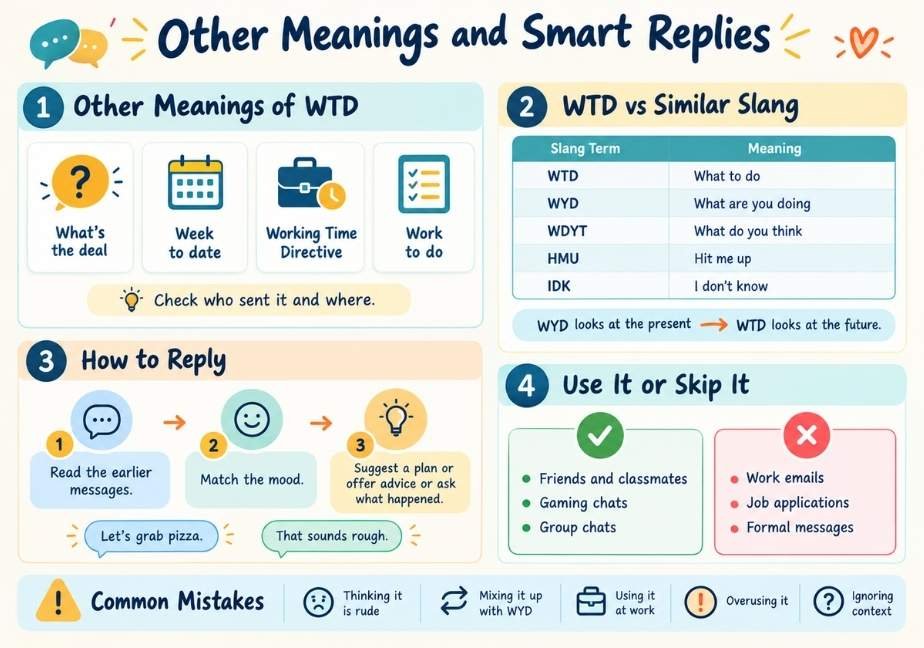
WTD is not always about advice. A few other meanings exist. You can usually tell which one fits by looking at who sent it and where.
- What’s the deal: Used when something confusing or suspicious just happened.
- Week to date: A business term for numbers from the start of the week until today.
- Working Time Directive: A European Union rule about working hours that appears in HR talk.
- Work to do: A casual note that tasks are waiting.
The “what’s the deal” version often carries a sharper tone. Someone might text WTD? after a friend acts distant. In that case the sender wants an explanation and not a suggestion. The words around it will usually make this clear.
Week to date is common in sales and finance reports. A manager may ask for WTD numbers on a Wednesday. That means totals from the first day of the week up to that point.
The Working Time Directive comes from European Union employment law. It sets limits on working hours and rest breaks. You will meet it in workplace policy talk and not in casual chat.
WTD vs WYD and Other Similar Slang
People often mix up WTD and WYD. The letters look close but the meanings are not the same. This list shows how each one works.
- WTD: What to do. Asks for advice or a plan.
- WYD: What are you doing. Asks about your current activity.
- WDYT: What do you think. Asks for your opinion.
- HMU: Hit me up. Asks someone to contact you.
- IDK: I don’t know. Admits that you have no answer.
A simple trick helps. WYD looks at the present. WTD looks at the future. If you see WTD the sender wants to know what comes next.
Other slang can also show up in the same message. Someone might write “IDK WTD” to say they have no idea what to do. That is a natural mix in fast chats. Read each code one at a time and the meaning becomes clear.
What Does WTD Mean From a Guy or a Girl?
Many readers want to know if WTD is flirty. The answer depends on the context. The letters themselves are neutral. Gender does not change the meaning because a guy and a girl use it the same way.
What changes the vibe is the relationship and the tone and the messages around it. Suppose you were just talking about weekend plans. If that person texts WTD they may want to make a plan with you. If they send it to a group chat it is more likely plain boredom.
Look at the timing and the rest of the chat. One short message rarely tells the whole story. A message sent late at night to only you may mean something different from a message in a busy group thread.
If you like the person and want to know more you can ask a clear question. Something like “Want to grab food later?” removes the guesswork. Clear words are kinder than guessing. They also save both of you from mixed signals.
How to Reply When Someone Texts WTD
Your reply depends on what the person needs. Read the earlier messages first. Then pick a tone that matches the mood. Here are five easy options.
- Give a plan: Let’s grab pizza and watch a movie.
- Offer advice: Call the shop first and ask for a refund.
- Ask for more info: What happened? Tell me the full story.
- Keep it light: Nap. Snacks. Repeat.
- Show support: That sounds rough. I am here if you need me.
If you do not know what the sender means you can simply ask. A quick “WTD as in what to do?” is polite and clear. Nobody will judge you for checking.
Match the energy of the message. A worried WTD needs a calm and helpful answer. A bored WTD is a good chance for a joke or a fun idea. A confused WTD may need a question so you can understand the problem.
When to Use WTD and When to Skip It
WTD fits casual chats with friends and classmates and online communities. It works best when the mood is relaxed and the other person knows the slang. It also fits fast chats where short messages feel natural.
Skip it in work emails and job applications and formal messages. A line like “WTD regarding the Q2 report?” can sound careless. Use full words such as “What should we do about the Q2 report?” instead. Clear writing builds trust at work.
Think about your audience too. Older relatives may not know the term. A new contact may read it the wrong way. When in doubt write the full phrase. It costs a few extra seconds and avoids a lot of confusion.
Common Mistakes People Make With WTD
Slang is easy to misread. These are the most common slips.
- Assuming WTD is rude or angry when it is usually neutral.
- Mixing it up with WYD and answering the wrong question.
- Using it in a professional message where full words look better.
- Overusing it so every reply feels short and low effort.
- Ignoring context and missing the work meaning of week to date.
Most confusion fades when you read the whole thread. One glance at the earlier messages often reveals the meaning. If it still feels unclear ask the sender directly.
Is WTD Still Used Today?
Yes it is still used. It is not the newest slang online but people still understand it. Its short form and simple meaning help it survive. New terms appear each year while older ones stay alive in friend groups and gaming chats.
Slang also shifts by community. One group may use WTD every day. Another may never touch it. If you are unsure whether it fits your circle watch how your friends write and follow their lead.
FAQs
What does WTD mean in text?
It usually means what to do. People use it to ask for advice or ideas when they feel unsure about the next step.
What does WTD mean on Snapchat?
On Snapchat it usually means what to do. Someone sends it when they feel bored or stuck and want a friend to suggest a plan.
Is WTD rude?
No. WTD is neutral slang. Any rude feeling comes from tone and context and not from the letters themselves.
What does WTD mean in business?
In business WTD often means week to date. It shows totals from the start of the week up to the current day.
How do I reply to WTD?
Read the earlier messages first. Then suggest a plan or offer advice or ask what happened. Keep the tone friendly and simple.
Final Takeaway
The WTD meaning in text is simple once you see it in context. It most often means “what to do” and works as a quick request for advice or a plan. It can also mean “what’s the deal” in a tense moment or “week to date” in a business report.
The safest habit is to read the whole chat before you decide. Match your reply to the mood and keep formal messages free of slang. Now you can answer the next WTD with confidence and even use it yourself with friends.






6 Comments